United States
Statue of Liberty
Study in United States from Nepal
The United States remains the top destination for global education, hosting the majority of the world's highest-ranking universities. Known for technological innovation, academic flexibility, and multicultural campuses, the US offers a transformative study experience.
In the US, you are not locked into one field from day one. The system encourages students to explore different subjects, declare majors later, and customize their curriculum to match their career aspirations.
Nepali students especially benefit from the STEM (Science, Technology, Engineering, and Math) extension, which grants graduates up to three years of post-study work rights in the country's booming job market.
Main Intakes
Spring (Jan), Fall (Aug)
Estimated Cost
$25,000 - $60,000 USD / Year
Visa Path
F-1 Student Visa
Required Tests
IELTS / PTE Academic
Top Courses to Study in United States
Nepali students frequently select these disciplines due to high educational quality, modern syllabus options, and strong employment opportunities:
1. Computer Science & Cybersecurity
The US is the home of tech giants. Degrees offer cutting-edge knowledge in AI, cloud computing, and cybersecurity, with direct access to Silicon Valley and tech hubs.
2. Business Analytics & Finance
STEM-accredited business degrees merge statistical analysis, data modeling, and management science to prepare you for high-paying corporate roles.
3. Engineering & Aerospace
With advanced labs and corporate partnerships, US engineering programs offer practical experience and research funding in aerospace, mechanics, and electronics.
4. Healthcare & Biotechnology
Degrees in biology, pharmaceutical sciences, and healthcare administration place you at the forefront of global medical research and public health management.
Top Universities & Colleges Popular Among Nepali Students
Here is a comparative overview of some of the key academic institutions in United States with details on popular programs and highlights:
| University Name | Popular Courses | Tuition Fees |
|---|---|---|
| University of Findlay | Animal Science, Pharmacy, MBA, Environmental Safety | $38,630 - $39,900 / year |
| Herzing University | Nursing, Healthcare Administration, Cybersecurity, MBA | $13,450 - $18,000 / year |
| Weber State University | Engineering Technology, Business Admin, Health Professions | $15,500 - $16,500 / year |
| Wichita State University | Aerospace Engineering, Business Analytics, Computer Science | $15,500 - $18,000 / year |
Featured Campus Showcases
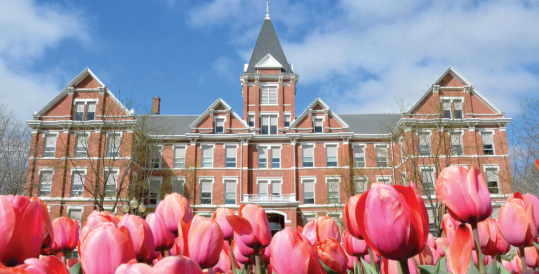
University of Findlay
A private university in Findlay, Ohio, recognized for its excellent animal science, equestrian studies, business, and health professions programs.
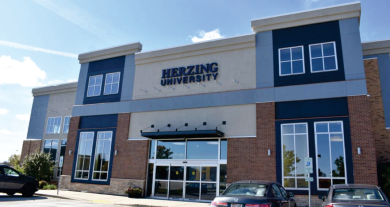
Herzing University
A career-focused private university with customizable online and on-campus degree paths in nursing, healthcare management, and IT.
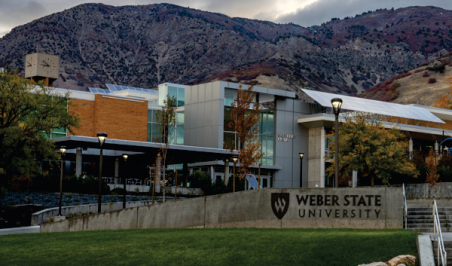
Weber State University
A public university in Ogden, Utah, offering a comprehensive range of undergraduate degrees and professional certifications.
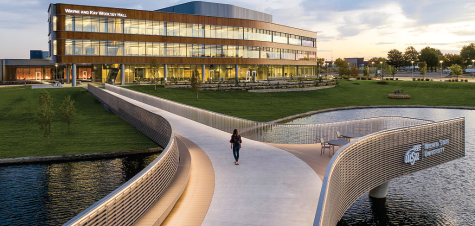
Wichita State University
A public research university in Wichita, Kansas, known for its National Institute for Aviation Research and strong industry ties.
Why study in United States?
The United States study route provides unique career pathways and academic values that make it a highly competitive choice:
Flexible curriculum allowing you to switch majors or customize degrees
STEM designation offering up to 3 years of post-study work (OPT)
Unmatched research facilities and funding opportunities
High availability of merit-based university scholarships and assistantships
Requirements to Study in United States
To secure a successful placement and student visa, students must satisfy the following admission and immigration criteria:
1. Academic Admission
Undergraduate: GPA of 2.5+ (60% equivalent) in high school (+2). Graduate: CGPA of 2.75+ in a 4-year Bachelor's degree (or 3-year degree with post-grad qualification).
2. Language Score
IELTS 6.0 to 6.5, TOEFL iBT 79+, or Duolingo English Test (DET) score of 105 to 115. Some institutions offer conditional admission if you take language classes first.
3. Financial Capacity
You must demonstrate enough liquid funds (bank balance, certificates, education loans) to cover the first year's tuition and living costs as stated on your I-20 form.
4. Genuine Student (GST/GS)
The US Embassy assesses your F-1 non-immigrant intent. You must show that you are a genuine student, have a clear study plan, and possess strong financial and family ties to return to Nepal.
Intakes & Deadlines
Institutions in United States offer multiple semesters. Early planning guarantees access to high-demand courses and bursary deadlines:
| Academic Intake | Study Period | Application Window | Key Information |
|---|---|---|---|
| Fall Intake | August / September | December to April | The largest and most important intake. Offers the most scholarships, assistantships, and course selections. |
| Spring Intake | January / February | July to October | The second major intake. Ideal for students who need more time to prepare test scores and documentation. |
| Summer Intake | May / June | January to March | Limited availability. Primarily used for English pathway programs, transfers, or specialized short courses. |
Cost of Studying in United States
Budgeting effectively allows you to focus on your studies. Below are the estimated annual budgets for tuition and living:
| Expense Category | Estimated Cost Range | Description |
|---|---|---|
| Tuition Fees (Undergraduate) | $15,000 – $35,000 / year | Public universities and state colleges generally offer more affordable tuition than private universities. |
| Tuition Fees (Postgraduate) | $18,000 – $40,000 / year | Highly variable depending on the university rank and professional nature of the program (e.g., MBA). |
| Living Expenses | $10,000 – $18,000 / year | Covers on-campus housing or off-campus shared apartments, food, utilities, and transport. |
| Student Health Cover | $1,500 – $3,000 / year | Mandatory health insurance provided by the university or an approved third-party provider. |
Scholarships & Funding in United States
Fulbright Student Program
Highly prestigious bi-national program covering full tuition, living expenses, textbooks, airfare, and health insurance for Master's/PhD programs.
University Merit Scholarships
Direct tuition fee waivers granted by universities at the time of admission, based on your high school GPA, SAT score, or undergraduate CGPA.
Graduate Assistantships (GA/TA/RA)
Offered to Master's and PhD students. Covers full or partial tuition fees in exchange for part-time teaching, research, or administrative duties, plus a monthly stipend.
Humphrey Fellowship Program
A year-long professional development program for mid-career professionals, covering full travel, tuition, and living costs.
Maximize Your Funding Potential
Our admissions counselors help you identify appropriate grants, prepare required essays, and polish your Statement of Purpose (SOP) to boost your candidacy.
Frequently Asked Questions
Many US universities are 'test-optional' or 'test-blind' for admissions. However, having a good SAT score can significantly improve your chances of getting high-value merit scholarships, while a GRE score can aid in securing graduate assistantships.
The F-1 student visa interview is a face-to-face conversation at the US Embassy in Kathmandu. It lasts 2-3 minutes. You must demonstrate strong academic intent, solid financial backing, and clear ties back to Nepal. EduMark conducts rigorous mock interviews to build your confidence.
Yes, F-1 visa holders can work on-campus for up to 20 hours per week during academic semesters and full-time (40 hours per week) during holidays and breaks.
Optional Practical Training (OPT) allows you to work in your field of study for 12 months after graduation. If your degree is STEM-designated (Science, Technology, Engineering, or Math), you can apply for a 24-month extension, giving you 3 years of work rights in the US.